Can You Get an SBA Loan While Paying Merchant Cash Advances?
- MCA debt is not an automatic decline: SBA lenders evaluate whether the business can support the MCA payment, the proposed SBA loan payment, and normal operating expenses.
- Direct SBA payoff is generally not allowed: Under the 2025 rule change, merchant cash advances generally cannot be directly refinanced with SBA loan proceeds.
- Lender fit matters: Businesses with one manageable MCA and strong cash flow may still qualify, especially when matched with the right SBA lender.
If you are searching for an SBA loan with MCA debt, or an SBA lender for MCA consolidation, the first thing to understand is that SBA loan proceeds generally cannot be used to directly pay off merchant cash advance debt under the SBA rule that took effect in 2025. But that does not mean every business paying an MCA is automatically declined for SBA financing.
Since that rule change, FastWaySBA has heard from many business owners who assumed they could not qualify because they were still paying a merchant cash advance. In practice, MCA debt is not an automatic disqualifier. The real question is whether the business can show enough cash flow to cover the existing MCA payments, the proposed SBA loan payment, and normal operating expenses while still remaining profitable.
Was your business declined because of MCA balances? Schedule a call for a second opinion. Not all SBA lenders use the same underwriting criteria.
Having a Merchant Cash Advance Does Not Automatically Disqualify You From an SBA Loan
To obtain an SBA loan while paying a merchant cash advance, a business must demonstrate that its cash flow can support both the proposed SBA loan payments and the existing MCA payments. MCAs create a disproportionately high debt service burden relative to the amount of capital received, and that pressure can hurt a business's debt service coverage ratio, commonly called DSCR.
SBA lenders include merchant cash advance payments in the debt schedule when evaluating repayment ability. That means MCA debt affects underwriting, but the presence of MCA debt alone does not automatically decline the application. Approval depends on the full financial profile: cash flow, payment history, current MCA balance, number of advances, term remaining, industry risk, credit, and the lender's own underwriting policy.
Businesses with one manageable MCA, a low remaining balance, and strong cash flow have the best chance of receiving an SBA offer. Businesses paying more than one MCA usually face a much harder path because stacked daily or weekly payments often consume too much available cash flow before the proposed SBA loan payment is even considered.
Why Some Businesses Remain SBA Eligible Despite MCA Balances
Carrying a merchant cash advance does not automatically make a business ineligible for SBA financing. The key factor is whether the business generates enough cash flow to comfortably support both its existing MCA payments and the proposed SBA loan payment.
Businesses with a single, manageable MCA and strong operating cash flow may still qualify. By contrast, businesses carrying multiple stacked MCAs often struggle to meet lender DSCR requirements because the debt burden is already too high. Since lenders include existing MCA payments in the debt service calculation, excessive MCA obligations can leave insufficient cash flow to support an additional SBA loan.
This is why two businesses with MCA debt can receive very different answers. One business may be declined because its MCA payments overwhelm cash flow. Another may still be eligible because the MCA balance is low, the payment is manageable, and the rest of the file is strong.
Why SBA Lenders View MCA Debt Differently Than Traditional Loans
Traditional business loans are usually amortized over a defined term with predictable monthly payments. Longer terms tend to make payments more manageable and easier to evaluate in a lender's cash flow analysis.
Merchant cash advances work differently. They are typically repaid over a much shorter period through daily or weekly remittances, which creates a higher short-term payment burden. SBA lenders generally view MCAs as advances against future receivables, not as traditional installment loans. That matters because the fast repayment pace directly affects a business's ability to service additional debt.
For a business owner looking for an SBA loan after merchant cash advance funding, the issue is not simply whether the MCA exists. The issue is whether the MCA payment schedule leaves enough cash flow for the SBA lender to be comfortable with repayment.
Can an SBA Loan Pay Off an MCA?
Generally, no. Under the 2025 SBA rule change, merchant cash advances and factoring agreements are not eligible for direct refinancing with SBA loan proceeds. FastWaySBA covered that rule change in more detail here: New SBA Rules Released: MCA Debt Can't Be Refinanced.
That distinction is important. A business may still be considered for an SBA loan while it is paying an MCA, but the SBA loan generally cannot be structured as a direct MCA payoff. The business has to qualify with the MCA payment still counted in the debt service analysis.
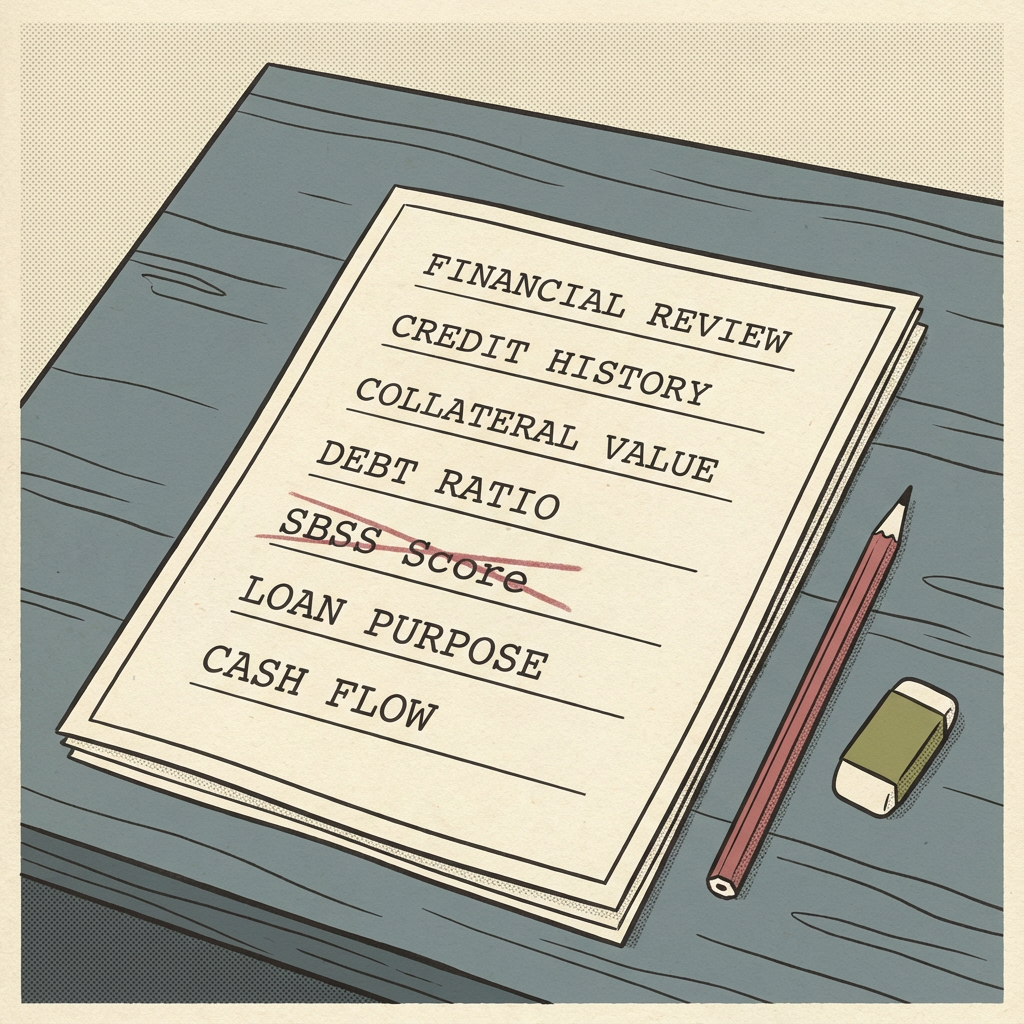
What Lenders Look At When You Have MCA Debt
When an SBA lender reviews a business with MCA debt, the lender will usually focus on:
- The number of active MCAs
- The remaining MCA balance
- Daily, weekly, or monthly payment burden
- DSCR after including current MCA payments
- Bank statement trends and overdraft activity
- Recent revenue stability
- Profitability after addbacks
- Credit profile and payment history
- Whether the MCA is a one-time issue or part of a repeated debt cycle
DSCR is one of the biggest factors. A business may appear profitable on paper but still fail underwriting if too much cash is being pulled out each week by MCA payments. For a deeper breakdown, see FastWaySBA's guide to how DSCR is actually calculated.
You Can Still Get an SBA Loan With MCA Debt
Having a merchant cash advance does not automatically prevent your business from obtaining SBA financing. The lender, cash flow, debt structure, number of advances, and overall financial profile all play major roles in determining eligibility.
Businesses that understand which SBA lenders are willing to consider MCA debt often have more financing options than they realize. That is why working with an advisor like FastWaySBA can improve the placement strategy. FastWaySBA knows which lenders are more likely to review businesses with MCA debt, which lenders are stricter, and how to evaluate the file before submitting it.
If your business was declined because of MCA balances, the decline may not be the final answer. Schedule a discovery call with FastWaySBA for a second opinion, or start your application if you are ready to move forward.

.svg)

.svg)